
This would be some sort of intro
Tracks With Diagrams
Cinquillos
Cinquillo intro
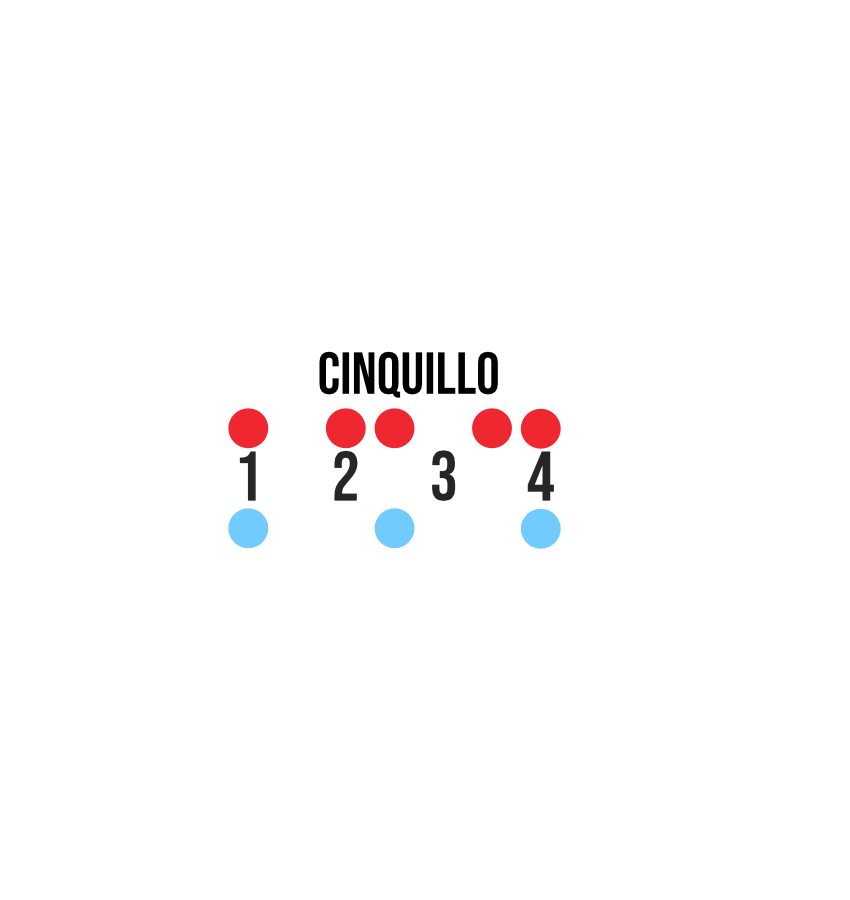
Cinquillo is a short rhythmic phrase that is most commonly found withing the Cuban “Danzón” genre. However you will find this rhythmic phrase all over Cuban music.
I like to recommend to think of it like a variation of the Cuban “tresillo” (the blue dots in the diagram) which is a rhythmic phrase that exists all over the world by different names or without a name. But in Cuban music it is basically the 3 side of the Son Clave.
In this lesson I have referred to other rhythmic phrases as to cinquillo variations but in reality this is the only phrase that is actually called cinquillo.
As you will see i wrote it in musician counts but if you count like a dancer it can also start on 5. You can look at an example below in the Baqueteo diagram.
In the Cinquillo playlist below, you can hear many examples of the cinquillo rhythmic phrase. You may find it in the rhythm of the singing, the horns, the piano, and basically on anything that makes a noise on these tracks.
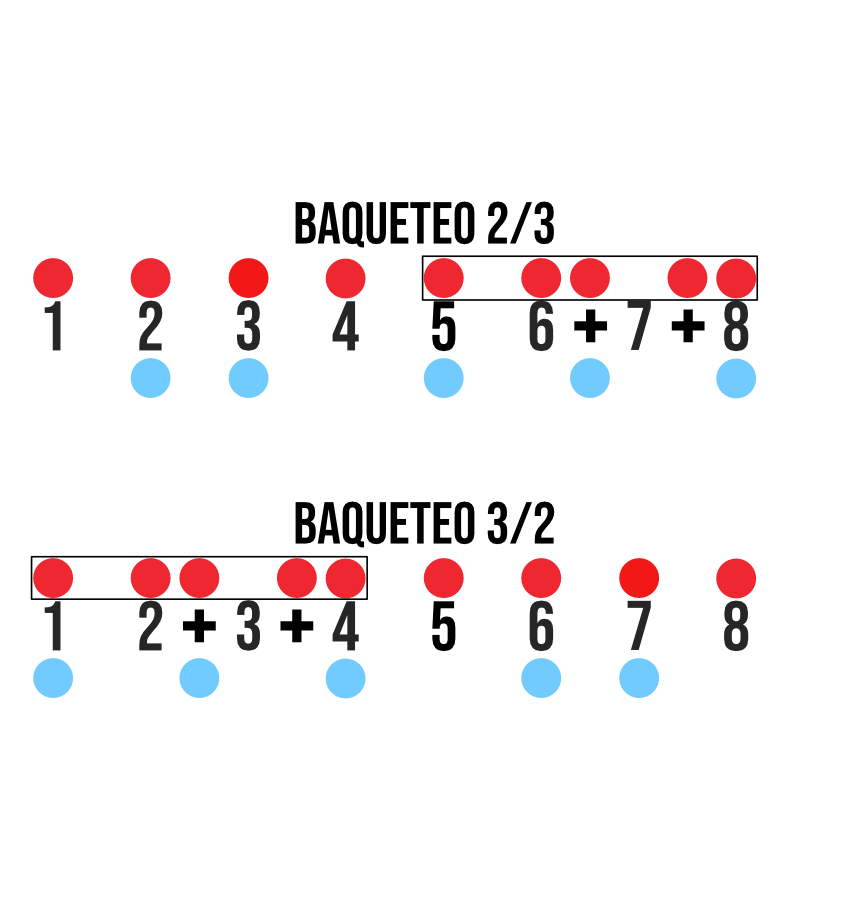
Baqueteo is the underlying rhythm of Danzón music. It consists of the Cuban “cinquillo” as well as four beats. You can think of this as being the clave of Danzón music.
I recommend to people to think of the “baqueteo” rhythm as a complicated Son Clave. Although I have heard from some that it does not contain the Son clave.
The concept of clave is to have one rhythm that repeats throughout the whole song or is felt throughout the song and helps organize how everybody in the ensemble plays.
Many times musicians will use the word clave to refer to these repetitive rhythms. So if you prefer not to think of the baqueteo as a complicated Son Clave then think of it as the clave of Danzón music
In the Danzón playlist below you can hear many examples of the Baqueteo rhythmic phrase. However, unlike the cinquillo playlist, you will find this mainly in the percussion throughout the whole song. With exceptions once you get to the montuno/mambo/chacha section.
Track 1 Cinquillo and reverse cinquillo
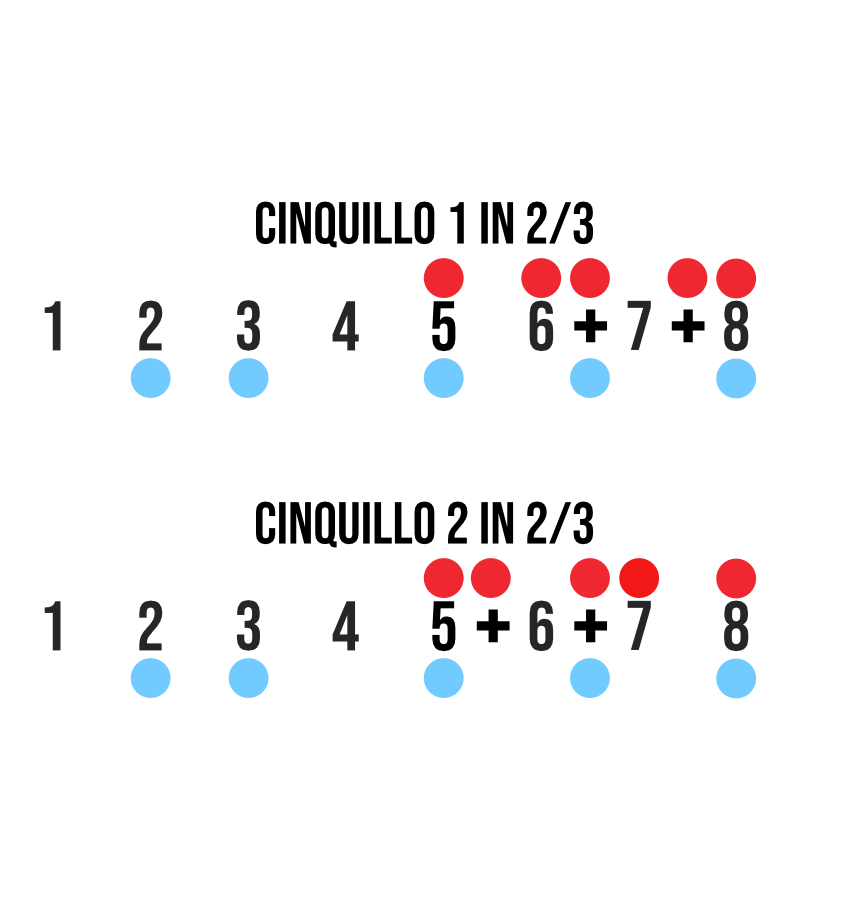
For this track you will have to identify the cinquillo or what I call reverse Cinquillo. You will listen to it with a 3/2 piano montuno as well as a 2/3 piano. If the track plays the cinquillo motif it will play one cowbell. if it plays the reverse cinquillo then the track will play 2 cowbell sounds regardless of the clave direction.
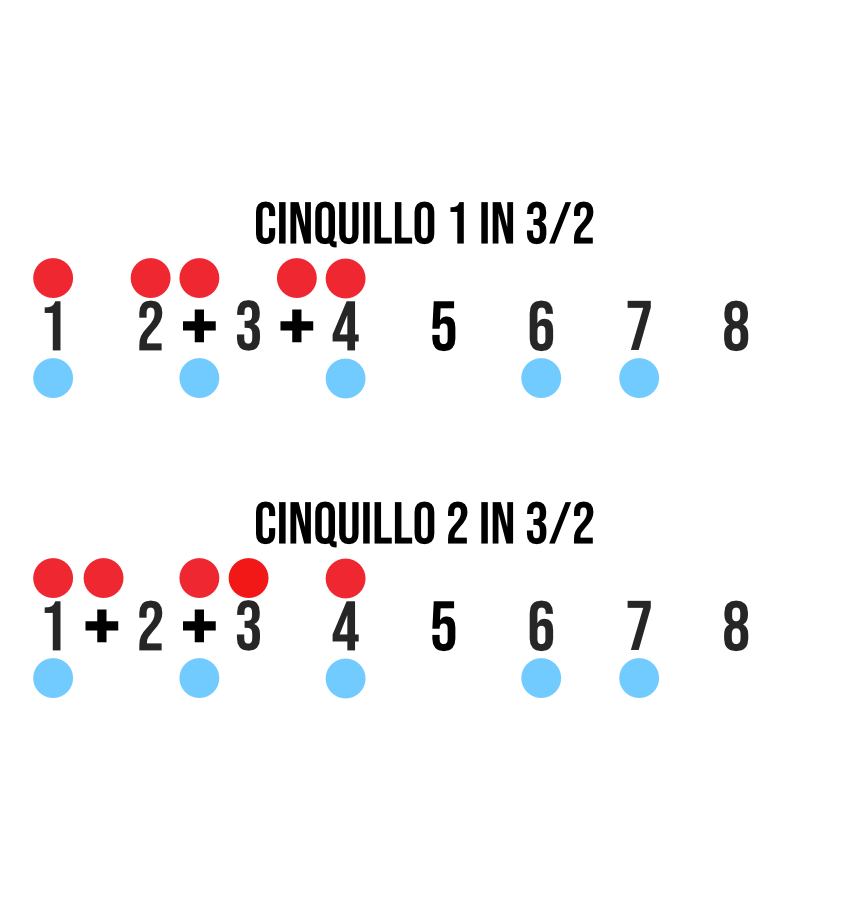
Track 2 Cinquillo vs Cinquillo 3
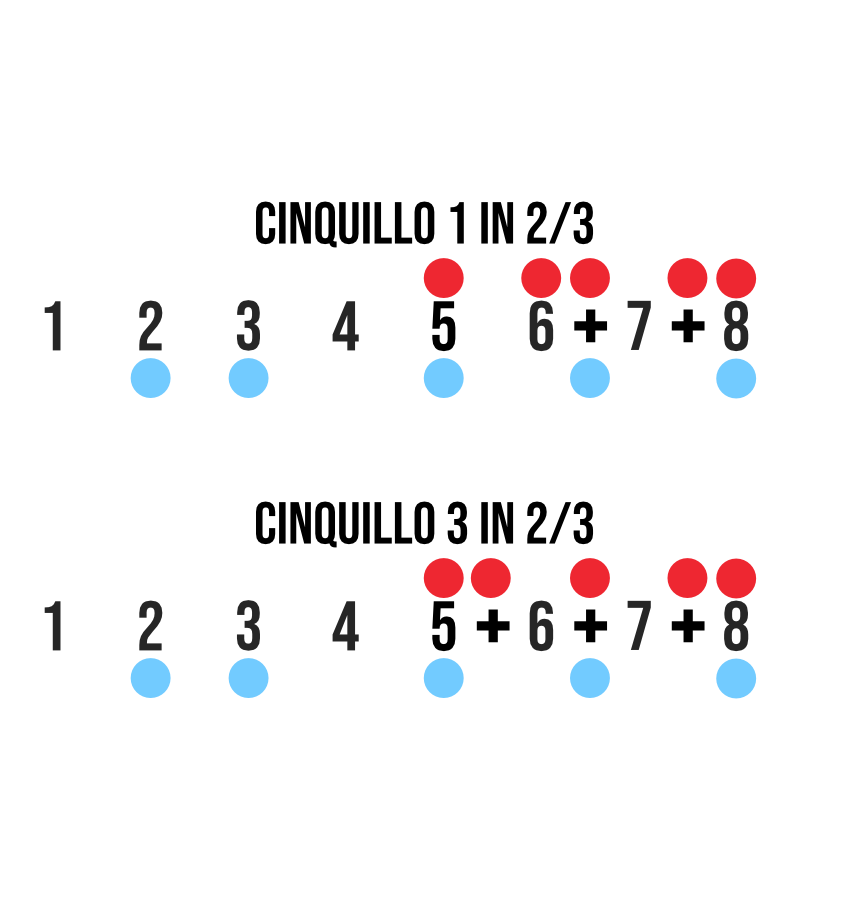
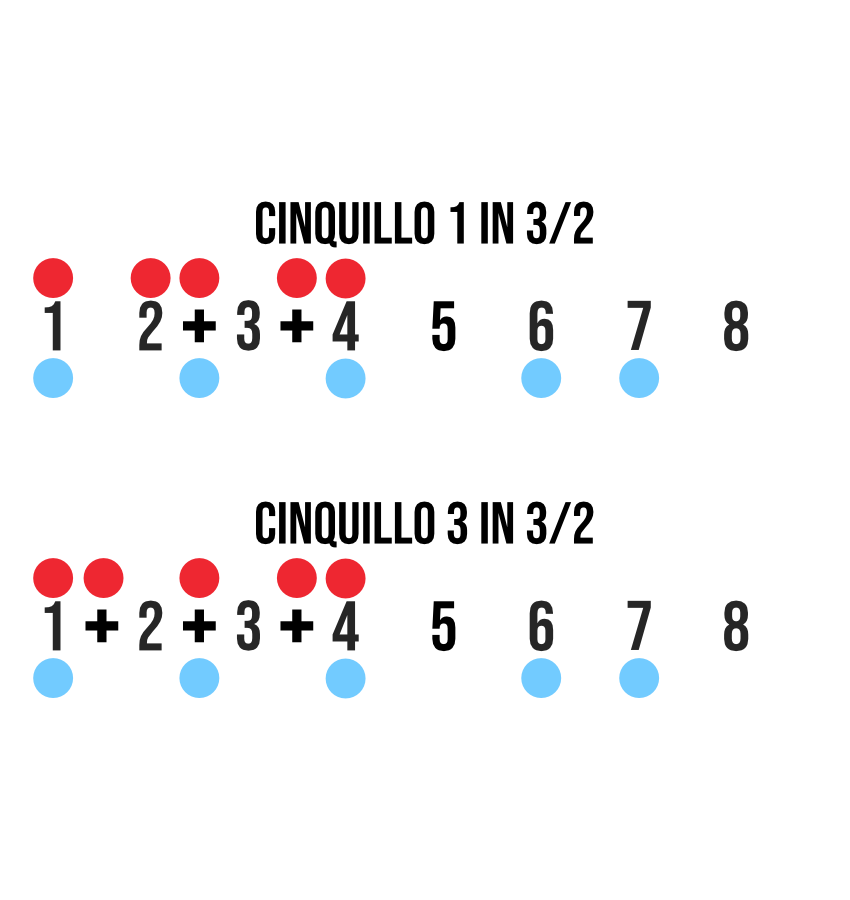
For this track you we still have cinquillo number one. But now we are comparing it to cinquillo 3. After all the main objective with the cinquillo tracks is to be able to identify the real cinquillo.
There will be 1 cowbell sounds for number one and 3 cowbell sounds for number three.
Track 3 All Cinquillos
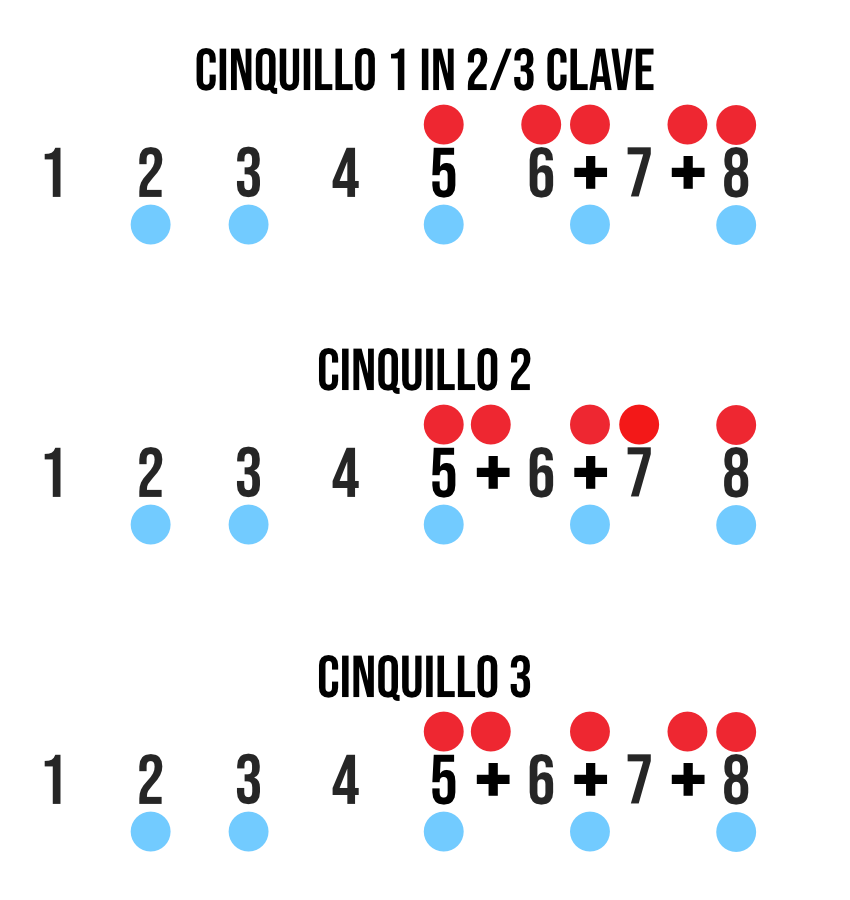
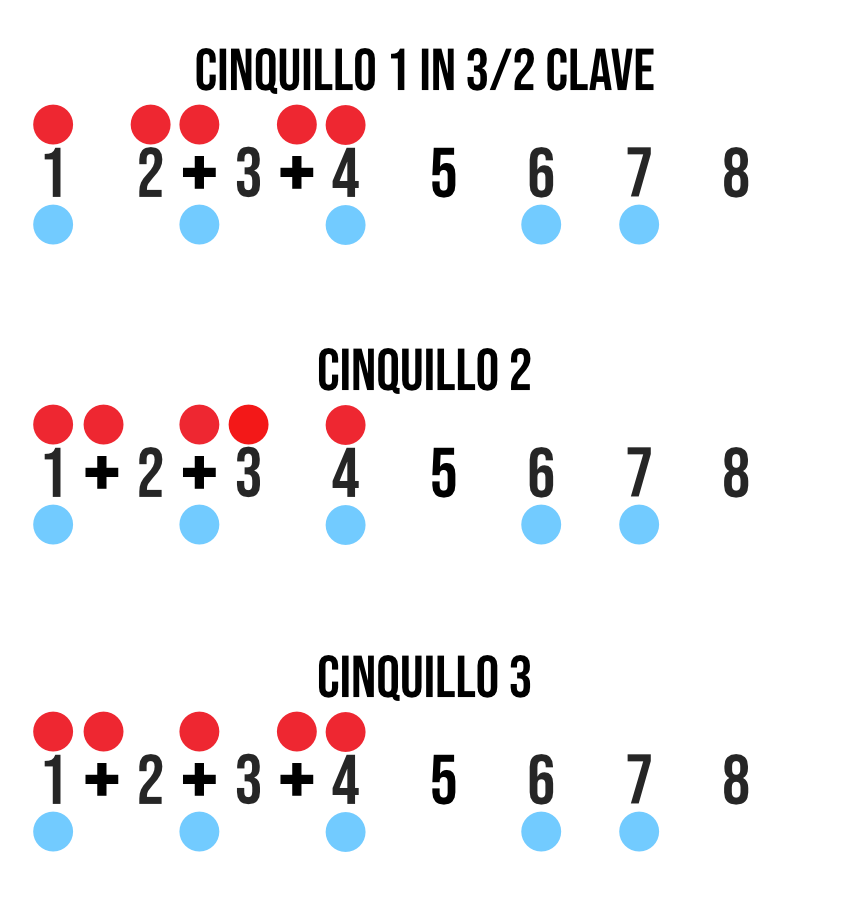
For this track you will have to identify all of the cinquillos. There are 6 possibilities if you count both 2/3 and 3/2. However that isn’t necessary. The most important part is that you can hear each of the patterns:
slow, quick quick, quick quick for number 1.
quick quick, quick quick, slow for number 2.
quick quick, slow, quick quick for number 3.
Beats and “Ands“
Beats and “Ands” intro
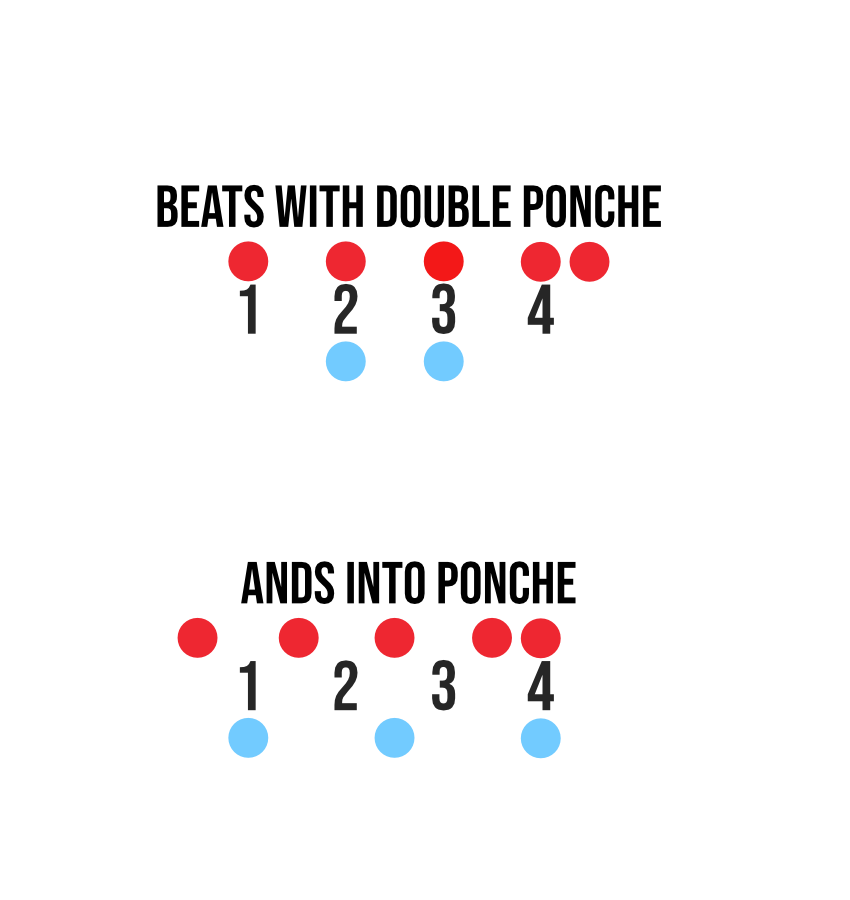
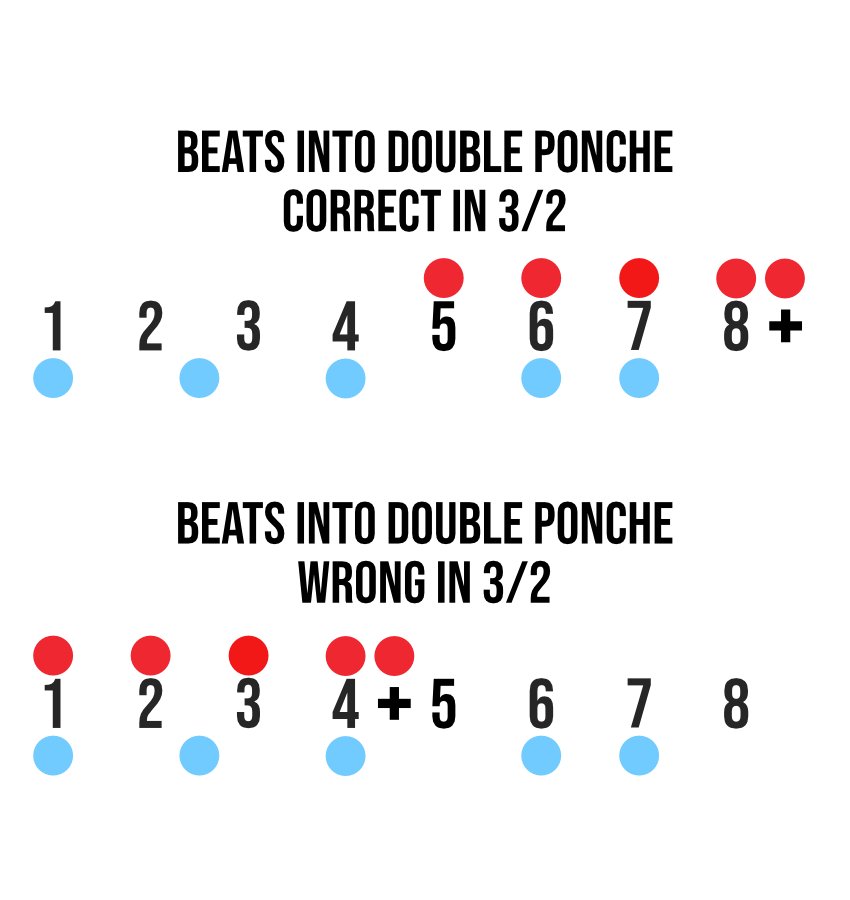
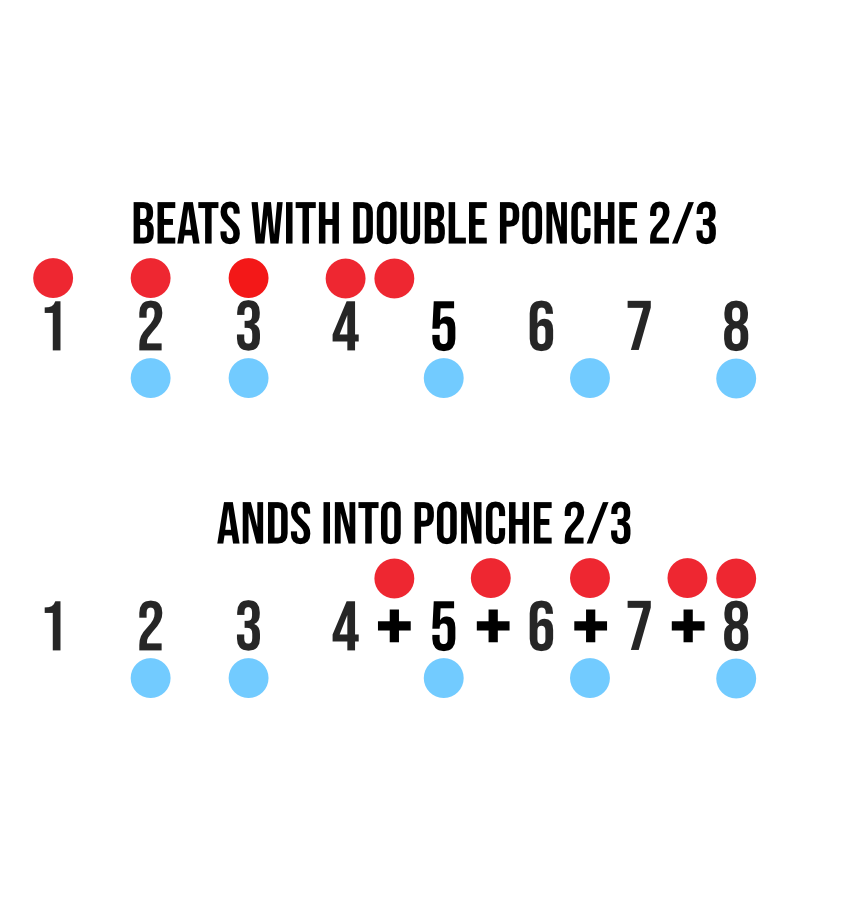
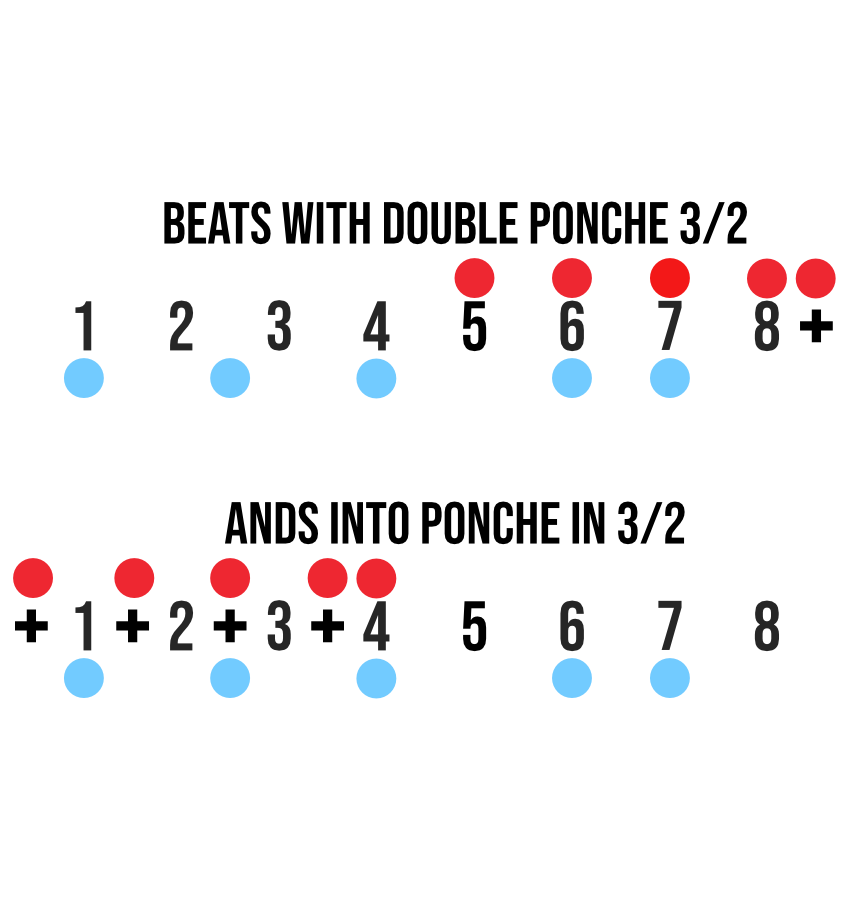
One of the most helpful things to be able to hear where the clave is to be able to tell the difference between the ands and the beats.
The 2 side of the clave tends to have more beats and the 3 side of the clave has more ands.
These 2 phrases in the diagram are exactly the same. 3 slows and a pair of quicks. You can also think of it as 3 quarter notes and 2 eighth notes. The only difference between them is where they start.
It is important to be able to hear or feel the difference between these two because they sound pretty similar to the untrained ear. However hearing these phrases wrong can result in hearing the clave wrong.
Like other motifs these can start on the other side respectively. So the beats can start on 5 and the ands can start on 8.5.
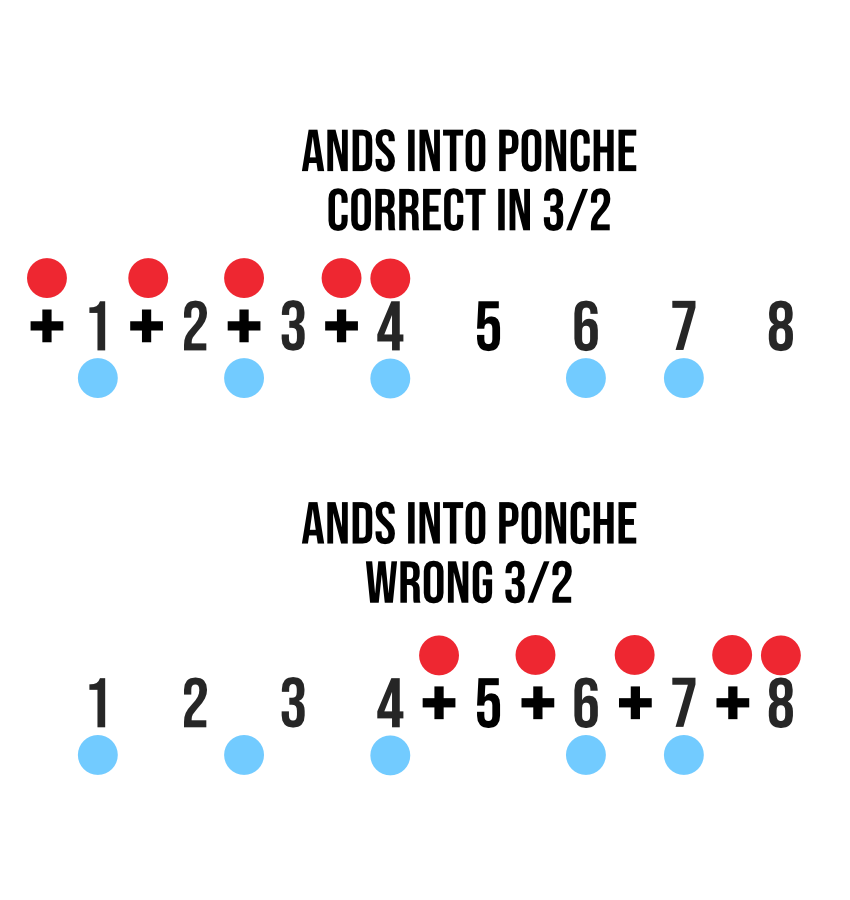
Track 1 “Ands” into ponche correctness
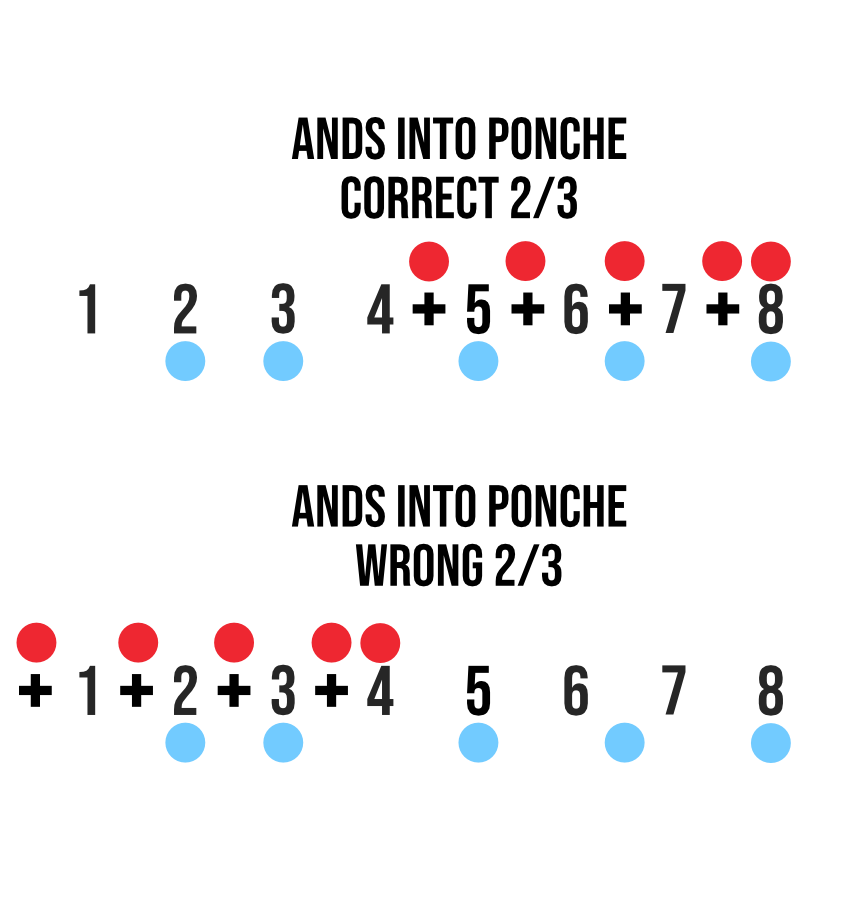
For this track you will have to identify thesounds
Track 2 Beats with double ponche correctness
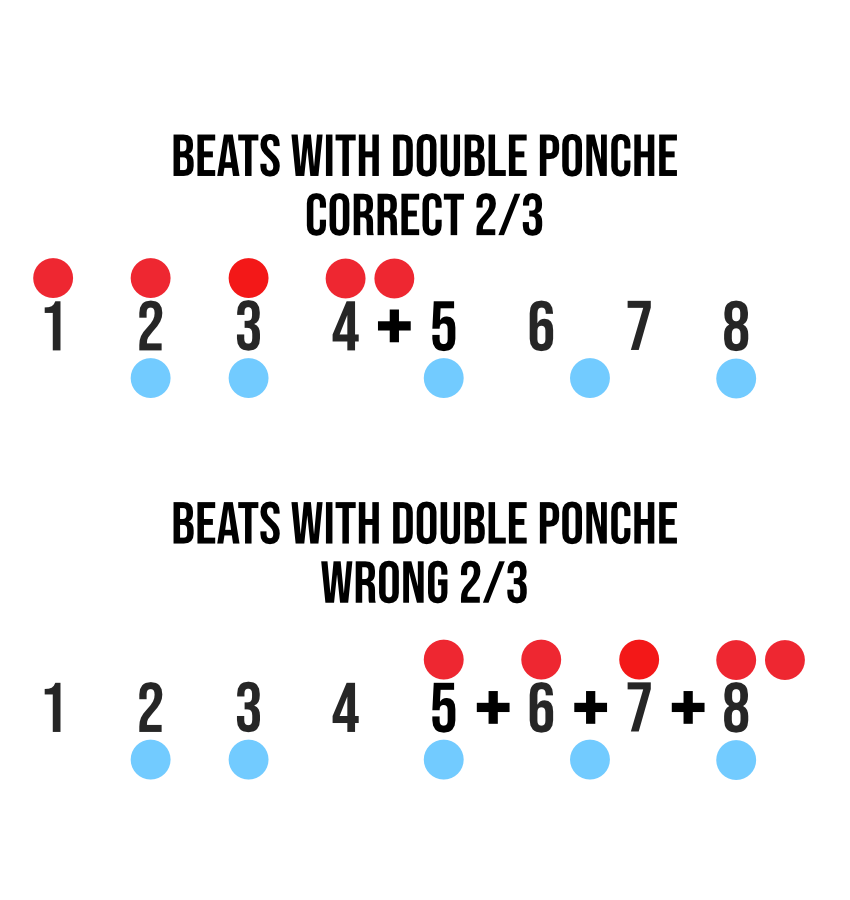
For this track you will have to identify the cinquillo or what I c
Track 3 Beats w/2xponche vs “Ands” into ponche
For this track you will have to identify the cinquillo or what I call reverse Cinquillo. You will listen to it with a 3/2 pia
Track 4 Ands into ponche 1 slow vs 2 slow
For this track you will have to identify the cinquillo or what I call reverse Cinquillo. You will listen to it with a 3/2 piano montuno as well as a 2/3 piano. If the track plays the cinquillo motif it will play one cowbell. if it plays the reverse cinquillo then the track will play 2 cowbell sounds
Track 5 Ands into ponche 2 slow vs 3 slow
For this track you will have to identify the cinquillo or what I call reverse Cinquillo. You will listen to it with a 3/2 piano montuno as well as a 2/3 piano. If the track plays the cinquillo motif it will play one cowbell. if it plays the reverse cinquillo then the track will play 2 cowbell sounds
Track 6 Ands into ponche 1 slow vs 2 slow vs 3 slow
For this track you will have to identify the cinquillo or what I call reverse Cinquillo. You will listen to it with a 3/2 piano montuno as well as a 2/3 piano. If the track plays the cinquillo motif it will play one cowbell. if it plays the reverse cinquillo then the track will play 2 cowbell sounds